
If you’ve spent time building modern AI systems recently, you’ve probably experienced something like this:
You start with a fairly simple application idea, but then the architectural recommendations begin.
- PostgreSQL for relational data
- MongoDB for documents
- Pinecone for vectors
- Neo4j for relationships
- Redis for memory
- Elasticsearch for search
- InfluxDB for metrics
- Kafka for events
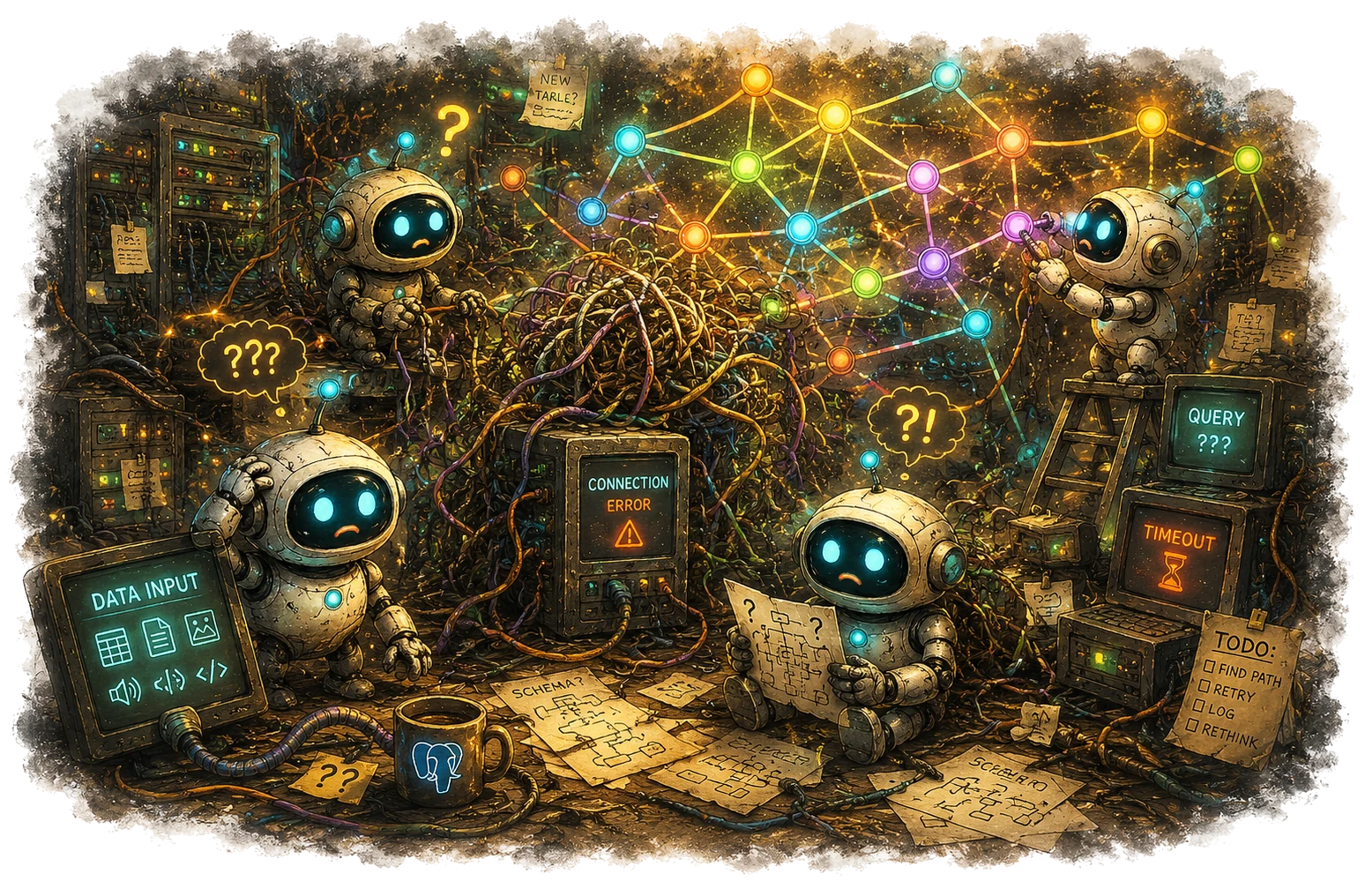
Before long, your “small AI prototype” starts turning into a surprisingly complicated distributed system.
Aside
Food for Thought
Sometimes the hardest part of modern software architecture is resisting the urge to build a hyperscale distributed system before you even have users.
Modern infrastructure tooling is incredible, but it also makes architectural overengineering surprisingly accessible.
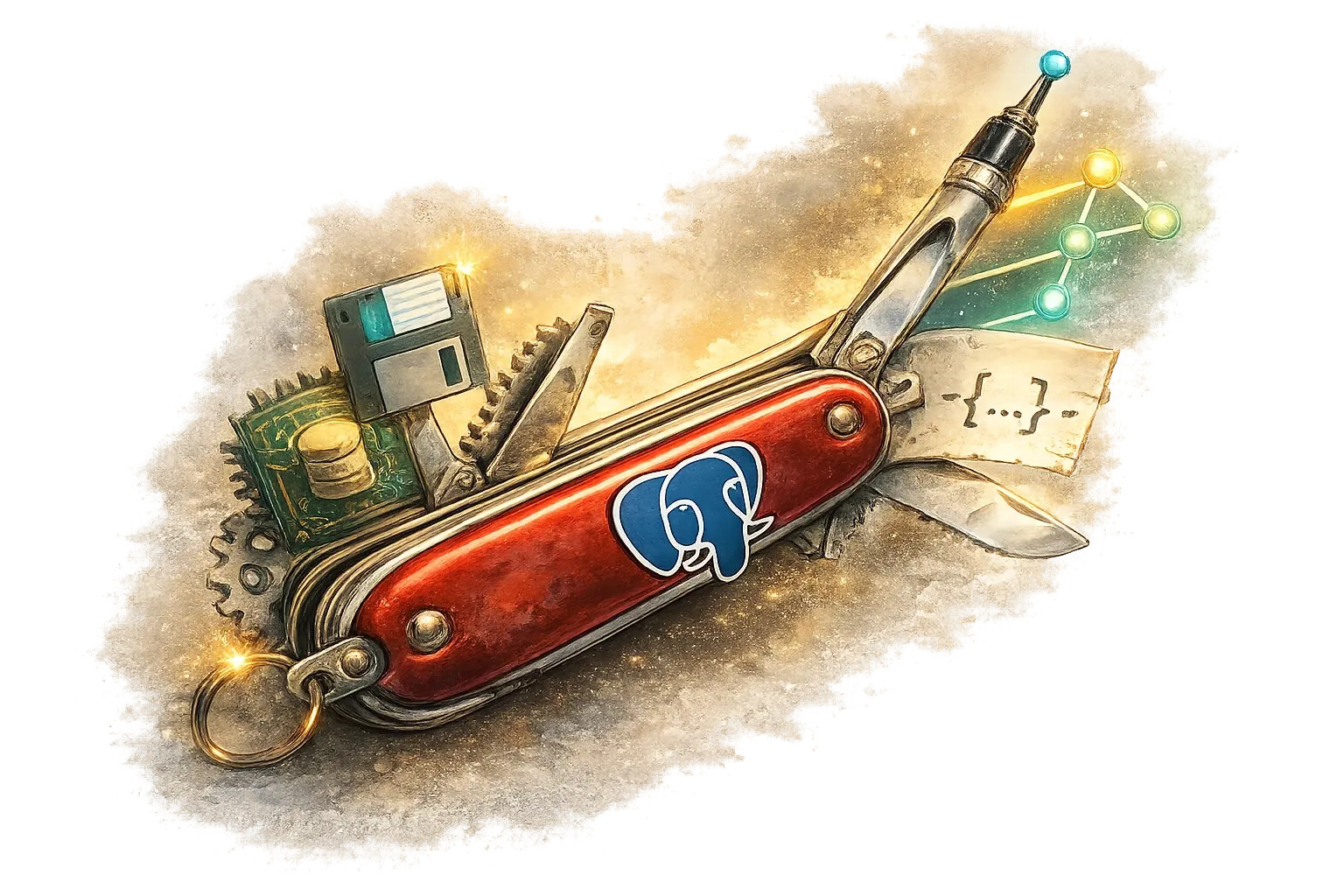
The interesting thing is that, increasingly, PostgreSQL can often handle a surprisingly large amount of this workload itself.
It won’t always be perfect or optimal, but it’s often good enough compared to introducing multiple specialist databases early on that may create more operational complexity than business value.
I think it’s easy to overlook just how capable modern PostgreSQL has become.
The Database Explosion
Modern systems have no shortage of database options. These are only some of them.
Relational Databases
- PostgreSQL
- MySQL
- SQL Server
- Oracle
- SQLite
Document Databases
- MongoDB
- Couchbase
- Firestore
- Cosmos DB
- DynamoDB
Vector Databases
- Pinecone
- Weaviate
- Qdrant
- Milvus
- Chroma
Graph Databases
- Neo4j
- JanusGraph
- ArangoDB
- Amazon Neptune
Search Engines
- Elasticsearch
- OpenSearch
- Solr
Time-Series Databases
- InfluxDB
- TimescaleDB
- OpenTSDB
Key-Value / In-Memory Databases
- Redis
- Memcached
- Riak
If you’re building modern AI systems, it’s incredibly easy to convince yourself that every single one of these technologies is immediately necessary, especially once the following terms start entering the conversation:
- Agent memory
- Long-term memory
- Semantic search
- Knowledge graphs
- Hybrid retrieval
- Vector similarity
- Relationship traversal
Now, these technologies absolutely exist for good reasons, but I also think it’s easy for early-stage systems to optimize for scale, specialization, and theoretical future requirements before they’ve validated the actual product.
PostgreSQL Became Much More Than “Just SQL”
I think one of the biggest misconceptions about PostgreSQL is that it still gets mentally categorized as “a traditional relational database.”
PostgreSQL has evolved significantly beyond that perception, and today it behaves more like an extensible data platform.
PostgreSQL Can Potentially Handle
- Traditional relational data
- Document-style storage
- Vector similarity search
- Graph-like traversal
- Full-text search
- Time-series workloads
- Geospatial queries
- JSON querying
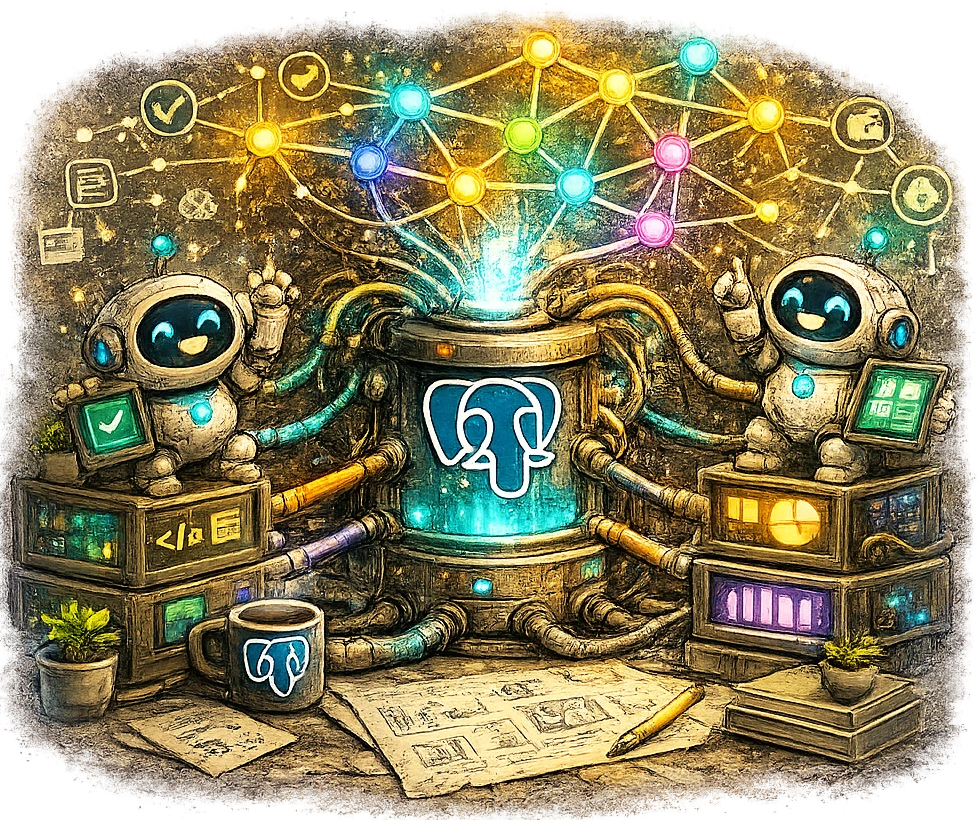
Now, obviously, that doesn’t mean PostgreSQL becomes the absolute best tool in the world at every one of these things, but for many applications, particularly early-stage AI systems, “good enough while operationally simple” is an extremely powerful engineering property.
pgvector Changed the Conversation
Let’s start with the obvious AI-related example.
Vector databases exploded in popularity because embeddings became foundational to modern AI systems, e.g.:
- Retrieval-Augmented Generation (RAG)
- Semantic search
- Memory systems
- Similarity matching
- Recommendation engines
Suddenly, vector search started appearing in a huge number of applications.
Naturally, specialist vector databases appeared to solve the problem, but then pgvector started becoming increasingly mature.

pgvector Allows PostgreSQL To Store
- Embeddings
- Vector indexes
- Similarity search queries
- Metadata filtering
- Hybrid structured and semantic retrieval
For many applications, it works remarkably well, particularly when paired with the advantages of remaining inside a single transactional database.
- Simpler infrastructure
- Simpler backups
- Simpler local development
- Simpler deployments
- Simpler consistency guarantees
- Simpler observability
I believe that for small teams who are prototyping and still trying to prove product-market fit, these benefits can be particularly compelling.
JSONB Turned PostgreSQL Into a Document Database
Another feature that dramatically changed PostgreSQL’s flexibility is JSONB.
This is the point where PostgreSQL starts becoming extremely attractive for AI workflows, as AI systems often produce awkward, semi-structured data:
- Tool outputs
- Agent state
- Workflow metadata
- Chat history
- Evaluation results
- Dynamic schemas
- Mixed structured/unstructured payloads
Traditional relational modelling can become painful here, but JSONB gives PostgreSQL a surprisingly document-database-like capability set.
JSONB Benefits
- Flexible schemas
- Nested querying
- GIN indexes
- Hybrid relational/document approaches
- Easier evolution of rapidly changing systems
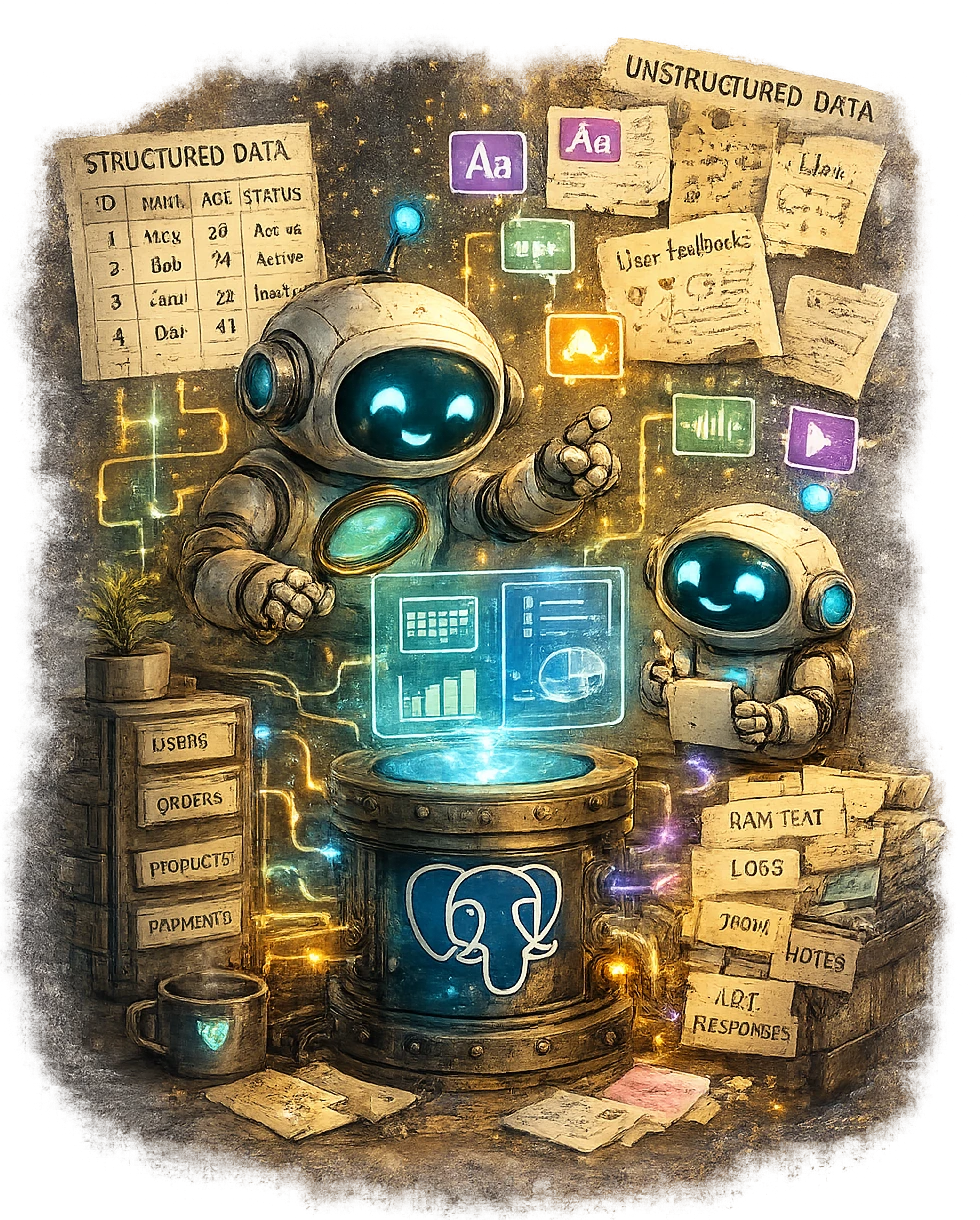
- No, it’s not identical to MongoDB.
- No, it won’t necessarily outperform dedicated document databases for all workloads.
But again, many systems don’t initially need perfect specialization, and if you can have reasonable flexibility without operational fragmentation, that might be the better option.
PostgreSQL Even Has Graph Extensions
This is probably the most surprising section.
PostgreSQL can even move into graph-style territory through extensions like Apache AGE.
Is PostgreSQL going to outperform Neo4j for deeply graph-centric workloads with highly optimized traversal patterns? Probably not, but if your application only has moderate graph requirements, the trade-off becomes more interesting.
For many applications, the requirement is not “internet-scale graph traversal.” It’s simply “store and query relationships reasonably well.”
So, now the question becomes:
Is the operational simplicity of keeping everything in PostgreSQL worth more than the theoretical performance gains of introducing a dedicated graph database?
Often the answer will absolutely be yes.
I think it’s also worth considering that many applications don’t truly need internet-scale graph traversal performance. They just need relationships.
Full-Text Search Exists Too
Another thing that’s easy to forget is PostgreSQL already includes surprisingly capable full-text search functionality.
That doesn’t mean Elasticsearch suddenly becomes obsolete, but again, for many systems, PostgreSQL can often provide a perfectly reasonable solution without introducing yet another operational dependency, e.g.:
- Moderate search requirements
- Internal tooling
- Prototype systems
- Operational dashboards
- AI workflow metadata
The Hidden Cost of Polyglot Persistence
I think this is one of the most underappreciated parts of the discussion, as every additional database introduces operational complexity.

Every New Database Potentially Introduces
- New infrastructure
- New authentication systems
- New SDKs
- New backup strategies
- New deployment concerns
- New monitoring requirements
- New scaling considerations
- New failure modes
- New operational expertise requirements
One of the biggest operational advantages PostgreSQL has isn’t even technical. It’s human.
There are a huge number of developers, DBAs, DevOps engineers, platform engineers, and cloud providers already deeply familiar with PostgreSQL, and that matters enormously.
Finding PostgreSQL expertise will generally be easier than finding specialists in:
- Neo4j
- Cassandra
- Pinecone
- JanusGraph
- Milvus
- ArangoDB
And that has real business implications.
- Hiring
- Onboarding
- Operational resilience
- Knowledge transfer
- Incident response
- Long-term maintainability
Sometimes “boring and well understood” is an extremely powerful architectural feature.
Local Development Is Surprisingly Straightforward
This is another area where PostgreSQL shines, as running it locally is so straightforward.
Modern PostgreSQL Setup Is Often
- A Docker container
- A Podman container
- A Railway deployment
- A Supabase instance
- A managed cloud service
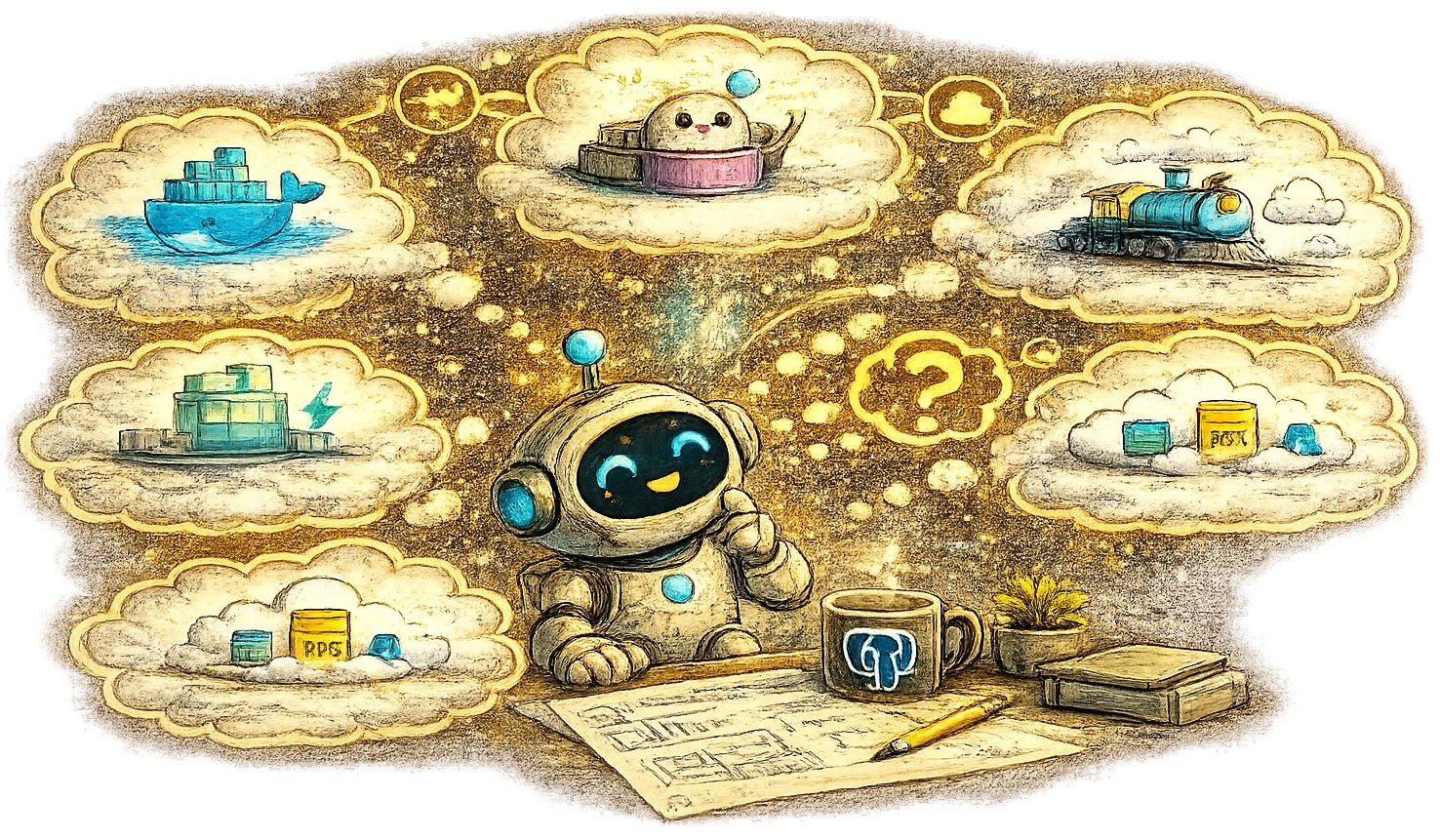
Compared to coordinating multiple specialist databases, local development can become dramatically simpler, and that simplicity compounds over time.
This Doesn’t Mean Specialist Databases Are Bad
To be clear, specialist databases absolutely have their place.
There are plenty of scenarios where dedicated systems become completely justified, e.g.:
- Massive vector workloads
- Extremely high-scale search
- Deep graph traversal requirements
- Huge throughput systems
- Specialized indexing needs
- Multi-region scaling requirements
- Ultra-low-latency workloads
At scale, specialist databases may dramatically outperform PostgreSQL, but I also think it’s easy to fall into the trap of reaching for specialization before a project has sufficient operational maturity or user demand to justify it.
Practical Systems Usually Involve Compromises
I think this is ultimately the core of the discussion. Us builders understandably love elegant specialization, but real-world systems involve trade-offs.
Sometimes the best architecture isn’t the theoretically perfect one. Maybe it’s the one that:
- The team can operate confidently
- The business can hire for
- The infrastructure team can support
- The developers can deploy easily
- The organization can reason about
- The product can evolve rapidly with
PostgreSQL is remarkably good at being that database.
Final Thoughts
I’m not suggesting PostgreSQL should replace every specialist database. That obviously isn’t realistic. However, I do think modern AI architecture discussions can easily underestimate how much PostgreSQL can already do, especially in the early stages of a product.
I think of it like this:
Once you move beyond architectural diagrams and into real operational environments, simplicity starts becoming extremely valuable.
The benefits are real!
- One database.
- One operational model.
- One deployment target.
- One set of backups.
- One talent pool.
- One ecosystem.

In real-world systems, operational simplicity is often far more valuable than theoretical architectural perfection.